


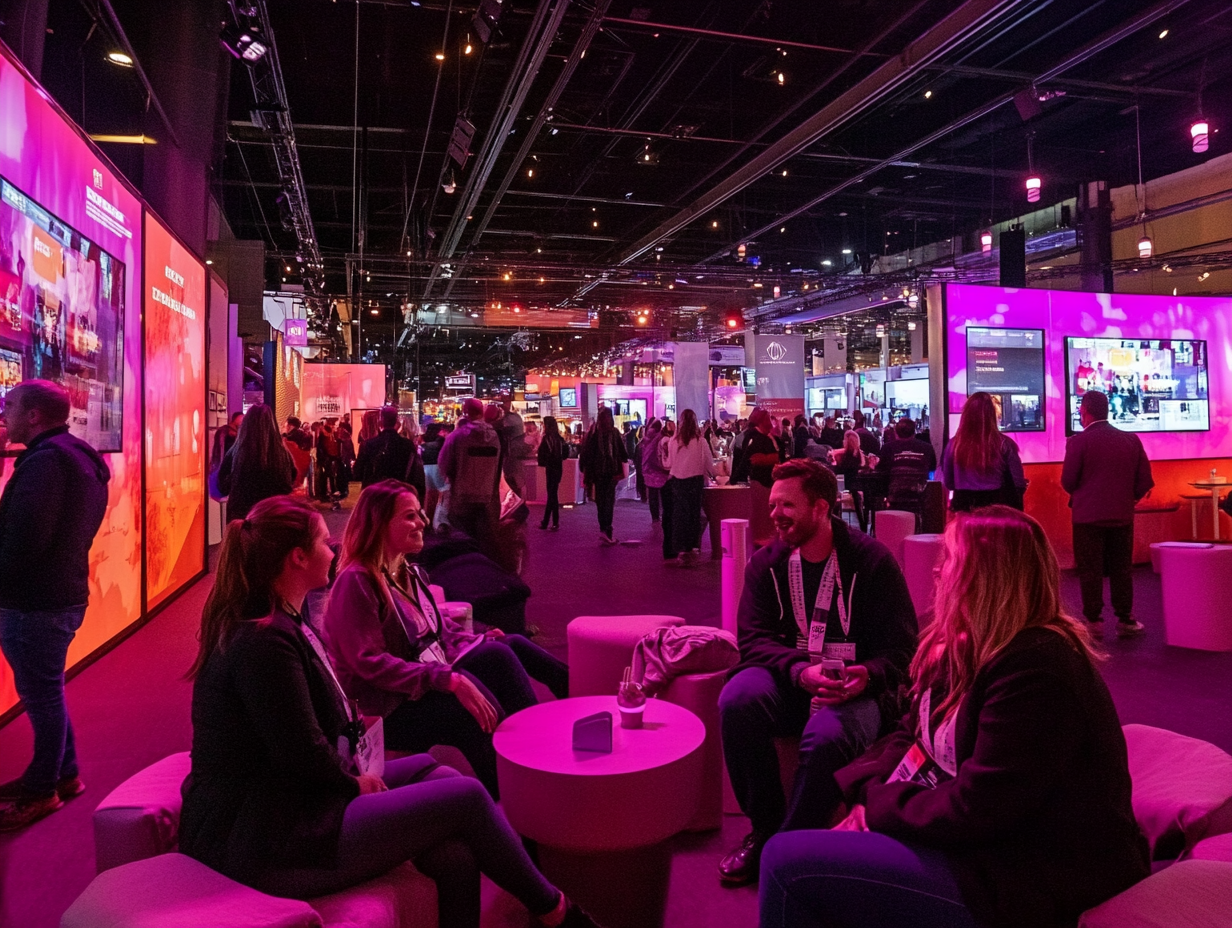
Industry Conferences
Industry conferences are a cornerstone of B2B event marketing, offering unique opportunities to engage with your target audience and expand your business reach. These large-scale events bring together professionals, executives, and thought leaders from specific industries, creating an ideal environment for networking, lead generation, and brand promotion.
Types and Characteristics
Industry conferences typically fall into two main categories:
- Industry-wide events: These are multi-day gatherings that cover a broad range of topics within a specific sector. They feature:
- Multiple panels and seminars
- Keynote speeches from industry leaders
- Hands-on workshops
- Extensive networking opportunities
- Niche-focused conferences: These events cater to specific segments within an industry, offering:
- In-depth discussions on specialized topics
- Targeted networking with professionals in your exact field
- Opportunities to showcase expertise in a particular niche
Objectives and Benefits
Participating in industry conferences can yield significant advantages for your B2B marketing efforts:
- Lead generation: Conferences provide a platform to present your products or services to a highly targeted audience, increasing the potential for quality leads.
- Brand awareness: Attending or speaking at conferences elevates your brand’s stature, associating you with industry thought leaders.
- Networking: These events facilitate relationship-building through open conversations, expanding your professional contacts and potential partnerships.
- Education: Gain insights into industry trends, new technologies, and best practices through educational sessions and workshops.
- Competitive intelligence: Learn about your competitors’ offerings and strategies by observing their presentations and booth displays.
Maximizing Conference Participation
To make the most of industry conferences:
- Set clear goals: Define specific objectives for attending or exhibiting at the conference.
- Plan your schedule: Prioritize sessions and networking events that align with your business objectives.
- Prepare your pitch: Craft a concise, compelling message about your company’s offerings.
- Follow up: Develop a strategy to nurture leads and maintain connections after the event.
By leveraging industry conferences effectively, you can significantly enhance your B2B marketing efforts, generate valuable leads, and establish your company as a key player in your industry.
Strategic Roadshows
Definition and Purpose
Strategic roadshows are a powerful B2B event marketing tactic where companies take their message on tour, visiting multiple locations to reach a wider audience. These one-day events aim to promote solutions or products while building brand awareness. Roadshows are particularly effective in immature or new markets, bringing the event directly to potential clients rather than requiring them to travel.
Key Components of Successful Roadshows
- Product demonstrations: Showcase products in action, giving potential clients hands-on experience
- Interactive activities: Engage participants with workshops and memorable experiences
- Press involvement: Invite media to increase coverage and visibility
- Customer speakers: Feature satisfied clients to provide social proof
- Partner collaborations: Leverage local networks to boost attendance and offset costs
Benefits of Strategic Roadshows
- Increased brand visibility across multiple regions
- Direct client engagement opportunities
- Ability to reach large numbers of potential customers in a short period
- Effective lead generation in new or developing markets
- Creation of lasting first impressions on target audiences
Planning and Execution
- Set clear objectives for each roadshow event
- Develop a comprehensive demand generation strategy
- Plan for logistics, including setup and teardown at multiple locations
- Create sponsorship packages to help offset costs
- Allocate ample networking opportunities for attendees
- Deliver business value to participants through informative content
- Budget allocation: Roadshows require significant resources for planning and execution
- Attendance targets: Account for a 40% no-show rate when planning for free events
- Quality over quantity: While generating fewer leads than digital channels, roadshow leads often have higher quality
- Follow-up strategy: Implement effective post-event communication to nurture leads
By incorporating strategic roadshows into your B2B event marketing plan, you’ll create powerful, personal connections with potential clients while expanding your reach across multiple markets.
Effective Networking Events
Creating Engaging Environments
Networking events form a crucial component of B2B event marketing, offering opportunities to build relationships and generate leads. To create engaging environments:
- Host casual gatherings like happy hours or trivia nights
- Organize volunteer activities or food-centered events
- Implement games or physical activities as icebreakers
- Use virtual breakout rooms for online or hybrid events
- Employ participant matching algorithms based on interests and skills
Facilitating Meaningful Connections
To foster meaningful connections at B2B networking events:
- Establish dedicated networking zones for open conversations
- Host informal receptions to encourage relaxed interactions
- Introduce speed networking sessions for efficient introductions
- Create virtual lounges in online events for small group discussions
- Provide conversation starters or themed discussion topics
Leveraging Technology
Utilize technology to enhance networking experiences:
- Implement event apps with built-in networking features
- Use AI-powered matchmaking tools to connect professionals with similar interests
- Integrate QR code scanning for quick contact information exchange
- Offer digital business card sharing capabilities
- Provide real-time messaging platforms for attendee communication
Capturing Lead Intelligence
Maximize networking events for lead generation:
- Develop concise, audience-specific questions for data collection
- Balance between gathering valuable information and maintaining simplicity
- Address data privacy concerns to build trust with attendees
- Employ lead retrieval and qualification tools for prompt follow-ups
- Monitor lead engagement post-event for effective nurturing
Hosting vs. Attending
Consider both hosting and attending networking events:
| Hosting Events | Attending Events |
|---|---|
| Grows brand recognition | Makes industry connections |
| Establishes industry leadership | Offers support and idea sharing |
| Requires existing network | Ideal for smaller, growing businesses |
| Creates connections with new industry members | Provides opportunities for future partnerships |
By implementing these strategies, you’ll create effective networking events that drive meaningful connections and business opportunities in the B2B space.
Exclusive VIP Dinners
Exclusive VIP dinners are a powerful B2B event marketing strategy that prioritizes quality over quantity. These intimate gatherings focus on building strong, personalized relationships with high-value prospects and existing clients.
Purpose and Benefits
VIP dinners create an environment for meaningful interactions between your company and valuable contacts. This approach:
- Fosters deeper relationships and trust
- Provides targeted networking opportunities
- Engages key stakeholders in an exclusive setting
- Potentially accelerates sales cycles
- Increases client loyalty
Types and Examples
- Standalone events: Host VIP dinners as separate, focused gatherings.
- Conference add-ons: Organize exclusive dinners as part of larger industry events or trade shows.
- Industry-specific gatherings: Invite prospects and customers from the same sector to encourage relevant discussions.
Best Practices
To maximize the impact of your VIP dinners:
- Invite a mix of prospects and existing customers to facilitate organic testimonials
- Ensure attendees are primarily C-level executives to maintain high-level conversations
- Include senior executives from your organization to demonstrate commitment
- Choose unique, impressive venues (e.g., castles, historical landmarks) to create memorable experiences
- Offer exclusive perks, such as reserved seating or special introductions to keynote speakers
- Use these events for sales pipeline generation, customer retention, and relationship building
By implementing these strategies, you’ll transform VIP dinners into powerful tools for strengthening business relationships and driving growth in the B2B sector.
Engaging Webinars
B2B event marketing offers a powerful way to connect with your target audience and drive business growth. By leveraging a mix of industry conferences trade shows strategic roadshows networking events and VIP dinners you’ll create meaningful connections and generate high-quality leads. Remember to tailor your approach to each event type and always prioritize valuable interactions. With the right strategy and execution B2B event marketing can significantly boost your brand visibility establish thought leadership and ultimately drive your business forward in today’s competitive landscape.